I attended a presentation of Canadian writer and director Ann Shin’s novel, The Last Exiles, in Miami last year. Her eclectic artistic career, interest in the human migratory experience, and impressive hands-on research as a filmmaker intrigued me. Later on, after watching the documentary The Defector, Escape from North Korea that inspired the book, I decided to interview Shin and learn more about her work.
Ann’s mother was born in North Korea and her father in Denmark. Both met and married in Toronto, Canada, but soon her father bought a farm in London, Ontario, where Ann was born. She spent her childhood on the family farm and later obtained a Bachelor of Arts and Master of Arts in English Literature at the University of Toronto. During her student years, she was a feature editor for The Varsity and a radio host for CIUT radio station. After graduation, Ann started working at CBC as a radio producer.
Ann became a well-known filmmaker and award-winning writer beyond her country in the following years. She authored eight documentary films and four books. Her documentary My Enemy, My Brother was shortlisted for a 2016 Academy Award and nominated for an Emmy. The Defector: Escape from North Korea won seven awards, including Best Documentary and Best Documentary Director, at the 2014 Canadian Screen Academy Awards, among other prizes. Her films and series have aired on CBS, TVO, HVO, ABC, CBC, YouTube Premium, The Documentary Channel, PBS, Discovery Channel, HGTV, and History Channel, among others.
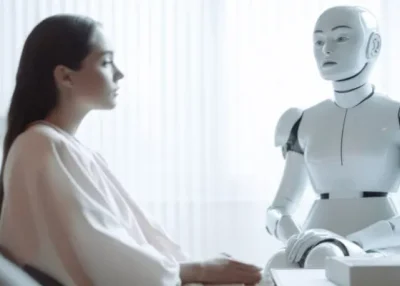
Her documentary A.rtificial I.mmortality explores the latest in cloning and avatar technology and questions the essence of the human mind, inquiring if it could be replicated. Her book The Family China (2013) won the Anne Green Award and was shortlisted for the Gerald Lampert Poetry Prize awarded by the League of Canadian Poets. Currently, Ann lives in Toronto with her partner and two daughters.
You grew up on a farm in British Columbia. How does your childhood experience in the open spaces and contact with nature influence your filmmaking and writing?
My parents came from Korea, and they grew up on farms there, so when I was four, my father bought a farm in Langley, British Columbia, and we moved there. So I grew up with open fields, and when I was nine, I learned to drive a tractor. I remember I always used to go to the forest whenever I was feeling down, and I think I had a lot of conversations with myself, and that I think was the beginning of my internal dialog with myself and my inner world that I believe all writers do, all creators do. We have that interior space in which creativity germinates and becomes something else. And so growing up in nature gave me the time and space. It is hard in the city, in a small apartment space, to sit and do nothing with your thoughts. But if you are sitting out in nature, there are trees and wind, and open spaces. You can be seated for a long time and be with your thoughts. I was fortunate to have that.
Your prolific creative production, particularly the more acclaimed works of art, encompasses the migratory human experience. When did you realize that you wanted to explore it?
I was always interested in the liminal spaces, the in-between spaces. Because being a child of immigrants, I always felt I grew up between the North American culture and my parent’s homeland culture. And I never felt complete, fully myself in just one; it had to be in both. So I was always interested in exploring those kinds of hyphenated identities, either cultural or gender sexuality. I felt an affinity to that ambivalence but also to that openness. There are many faces of existence and ways to be in the world.
As I was drawn toward stories about migration, I found that whenever I watched a movie or read a book, the chronicles of journey, migration, and exile really spoke to me. Stories like Sin Nombre, a film by Cary Fukunaga about people in El Salvador coming on a train to the United States, really affected me deeply. They were refugees having to work with smugglers to try to get to another country. I found that as I got older, I was interested in my own culture and the experience of migration and exile from Korea and North Korea. I started to investigate the North Korean effect and why they became refugees and had to fly to another country to find a land of safe haven finally.
I am drawn to these stories because my parents, as immigrants, chose to leave their country, but psychologically, emotionally, and spiritually they ended up being exiles. They found a home here in Canada, but in terms of their identity, a part of them belongs to the Korea of the nineteen fifties or sixties. So, even if they go back now, they will no longer find their old home. My mother was born on an island that is now full of developments, and my father’s small town, where he was born, now is developed as a modern city.
It is an interesting phenomenon experienced by people who left their homeland and came from South America, Europe, or the Middle East. There is somehow a candle burning deep in their hearts for a hometown that no longer exists in that form anymore. In that sense, I feel that we are all in some way in exile from our childhood’s homes. The places have changed due to economic development. And what I do in my work, in my writing or movies, is to honor that history that we had. Document and remember it, and in some way provide a critical lens about what happened to our homes as economic development had transformed and sometimes erased them.
In 2015 you firmed the documentary My Enemy, My Brother, based on a true story. How did you learn about these two war veterans, and was it hard to bring the protagonists to your project?
Zahed, an Iranian, and Najah, an Iraqi, were young soldiers during the Iran-Iraq War. They were enemies but became friends. I learned about their stories through a friend who had interviewed them. I felt so intrigued that I wanted to visit and talk with them. They live in the Vancouver, British Columbia area, where my parents lived at the time.
So I first visited Nahaj Abud, who lives in a bungalow packed with used things he buys and sells. He told me about his experience in the war, and his story about how Zahed risked his life on the battlefield to save him was captivating. I was there for over an hour and was so moved that I wanted to share the story with others. He agreed to do a documentary about it and how it was a miracle for him to meet Zahed again after twenty-five years. He really enjoyed sharing his story with others.
my parents, as immigrants, chose to leave their country, but
psychologically, emotionally, and spiritually they ended up being exiles. They found a home here in Canada, but in terms of their identity, a part of them belongs to the Korea of the nineteen fifties or sixties. So, even if they go back now, they will no longer find their old home.
We filmed together for four or five years. Najah’s wife and child were still missing from the war, so we followed him to Iraq to find them and help them. It was very moving to see how these families overcame their political differences and to sense the love that they shared.
The movie The Defector: Escape from North Korea is a documentary filmed in 2012 with the fly-in-the-wall technique in different locations. Tell us about this project and why you decided to use this method.
It is a great question, Isabel. Thank you for bringing that up. For The Defector documentary, we followed actual North-Korean defectors leaving their country. We were filming illegally from the border of North Korea and China, throughout China, into South East Asia, Cambodia, Laos, and Thailand. In China, we were filming illegally. As the defectors were also illegals, if officials caught them, they would be deported back to North Korea, sent to prison camps, and maybe tortured or executed. So the stakes were very high.
I did a lot of research about who the smugglers are in that job of taking the defectors out, and I got personal recommendations from a couple of people of this particular one whose name is Dragon. They really vouched for him. Then I met him in person, and he told me about the risks he took and how he managed to bring many defectors to safety. So, I weighed all those factors and decided to follow him. But it was nerve-wracking. When I first met Dragon, he was handling three cell phones at once, but in that business, he had to have burner phones that you use and get rid of them.
We had to keep very surreptitious about how to film. Our cameras had to hang from the neck, casually, as any photographic camera would. We had cameras that would take videos but looked like regular photo cameras. When in public, to not attract attention, the cameraman would move casually, with the camera holding from his neck, filming while he looked around. In terms of sound, we have all seen these big boom mikes hanging high and the sound operator. That is what you need for good sound, but we couldn’t do that. The sound was recorded with what looks like a cassette recorder but has two stereo mikes at the top, and he would have it in his pocket. So they would stand next to the people speaking, looking around, never at the camera. We worked like that in public situations, like going from a train to a public bus. Later in the evenings, we would frame everything properly in safe houses. We then could film the interviews and be interactive with the defectors.
As you said, we had to be a fly in the wall to understand what it is like to escape, to wait, be quiet, not draw attention, or be noticed. So we knew we were taking a significant risk when we decided to do it. But as with any risk you take in life, I think that if it is a calculated risk, then you are mitigating the possible adverse outcomes that might happen.
Now that you know the emigration phenomenon in Asia and Latin America, what would be the differences between people like Dragon, the smuggler in North Korea, and the Coyotes or smugglers on the US southern border? I noticed that Dragon charged his clients after the trip, not before, as Coyotes do.
The smugglers, mainly from North Korea, rely on the payments that they know that defectors will get when they arrive in South Korea if they go there because the government in South Korea has a welfare package of money, housing, and everything, that is going to provide to North Korean defectors.
It was strange because the smugglers work with the South Korean government to help bring people from the North. Because the government has to vet each defector, figuring out if they are spies. They also provide education, like what capitalism is or how to get a bank account, how to apply for a job, a job that would pay money. So the government deposits the money in the defector’s bank account, and the smugglers will collect their pay there. Then, in some way, you can justify that the smuggler takes the risk of getting the defector in South Korea safe, and he receives his welfare package. So it makes sense.
Developing a super-intelligence that supersedes human intelligence, what happens to humans in that instance? And also to look at various approaches like cloning ourselves, and to understand that desire, the desire to recreate ourselves, to become a creator and have our creation for us to manipulate, to become god-like. Those are some of the questions that I explore in that film.
I think it would be great to regulate this in other countries in some way. Smugglers, I have found, are stepping up to the gap between countries where government and charitable organizations are failing people. They are not handling this critical and very real part of inter-country refugees that are trying to reach a safer country. It is a need, and smugglers are addressing it, but governments are not.
Of the many gripping experiences I am sure you had filming, which was the most relevant anecdote while working on The Defector on site?
While filming The Defector, I was embedded with five defectors escaping their country. They were all young. I set up interviews late at night and heard their stories, why they left, and how they went. At one point, I was so inspired, and I said, “you are so brave!” They would say: “No, we are not brave. We are doing what we have to.” I was taken aback by the response, and I understood how desperate they were, that they did not feel they had a choice. They decided to leave that life because they could not live there anymore. It was out of desperation that they chose to leave. That made me understand they did not see their bravery at all and realize their resilience and that we are capable of much more than we believe. It is surprising, when it becomes necessary, what and how much people can undertake.
The third book you published in 2022, and your first fiction novel, The Las Exiles, is also about an escape, this time by a young couple, and inspired by your personal experience as a filmmaker in North Korea. What moved you to write this novel?
I first wanted to write the novel because the story of defectors today moved me, and it made me think of my parents and their journey as migrants from South Korea to North America. Now, the difference is that they elected to leave the country and were able to emigrate, while North Koreans had to escape undercover and migrate illegally. Their lives were similar to my parents’ conditions in South Korea in the 1960s. There was not a lot of food, and South Korea was doing more poorly than North Korea. So, the story of the exiles always resonated with me in that regard.
I wanted to write a story that resonated with other people whose families had to relocate from one country to another or that had to sacrifice for freedom. I found that some of our decisions are inspiring and brave, to most accounts, but in their own lives, that is the only move they envision they can make. So I wanted to create a journey for us to come along, to understand what it is to choose freedom when the stakes are so high. And also show how the love between these two characters beats the more powerful and enables them to endure difficult and awful circumstances. There is a lot of heart, passion, and determination in any refugee that starts that journey.
The topic of Artificial Intelligence has been a hot subject for a couple of decades now. What motivated you to make the documentary A.rtificial I.mmortality, in 2021, and why you chose to be the subject in the film?
I talked with a broadcasting partner about a film about Artificial Intelligence. What intrigued me most about it is that we are almost like narcissists, falling in love with our image in the water, so we are creating ourselves again with Artificial Intelligence. We are trying to recreate our intelligence in computers, and people are also interested in creating clones of themselves if possible. So these are some of the questions that come around with Artificial Intelligence.
With those thoughts in mind, I wanted to embark on a journey where I questioned the impulse driving us to develop Artificial Intelligence is. To what end? And do we really want to live forever? Some people think that somehow it is the way to live forever, that we somehow meld with the machine and find the way to live forever. People like Elon Musk, with his company Neuralink, are certainly doing that already because now there are chips we can implant in our brains that help us search the Internet. We don’t need Google anymore. We can download directly from the Internet to our brains and upload information into our minds.
So what I wanted is for us to think about this impulse that we have. What are some of the dangerous ramifications of it? I talked to philosophers like Nick Boston from Oxford, who discussed about where this leads us. Developing a super-intelligence that supersedes human intelligence, what happens to humans in that instance? And also to look at various approaches like cloning ourselves, and to understand that desire, the desire to recreate ourselves, to become a creator and have our creation for us to manipulate, to become god-like. Those are some of the questions that I explore in that film.
Are you working on another project, either a movie or a book?
Yes, I am working on a book that is set in the near future. It is about a child of immigrants in a relationship with a Canadian. They explore their identities through a futuristic form of therapy that allows them to access each other’s memories to understand each other better. And the memories are taken not only from their own lives but also from their parents’ lives. So I am looking for a generational memory. If we can better understand those memories, we may have a more coherent form of life here today.
And also there are several movies. One of them is a film I am producing by a Korean filmmaker about a North Korean division formed with women who must serve leader Kim Jong-un. We have found four women from that country that came forward to talk about this very secret pleasure program.